|
English |
![]() |
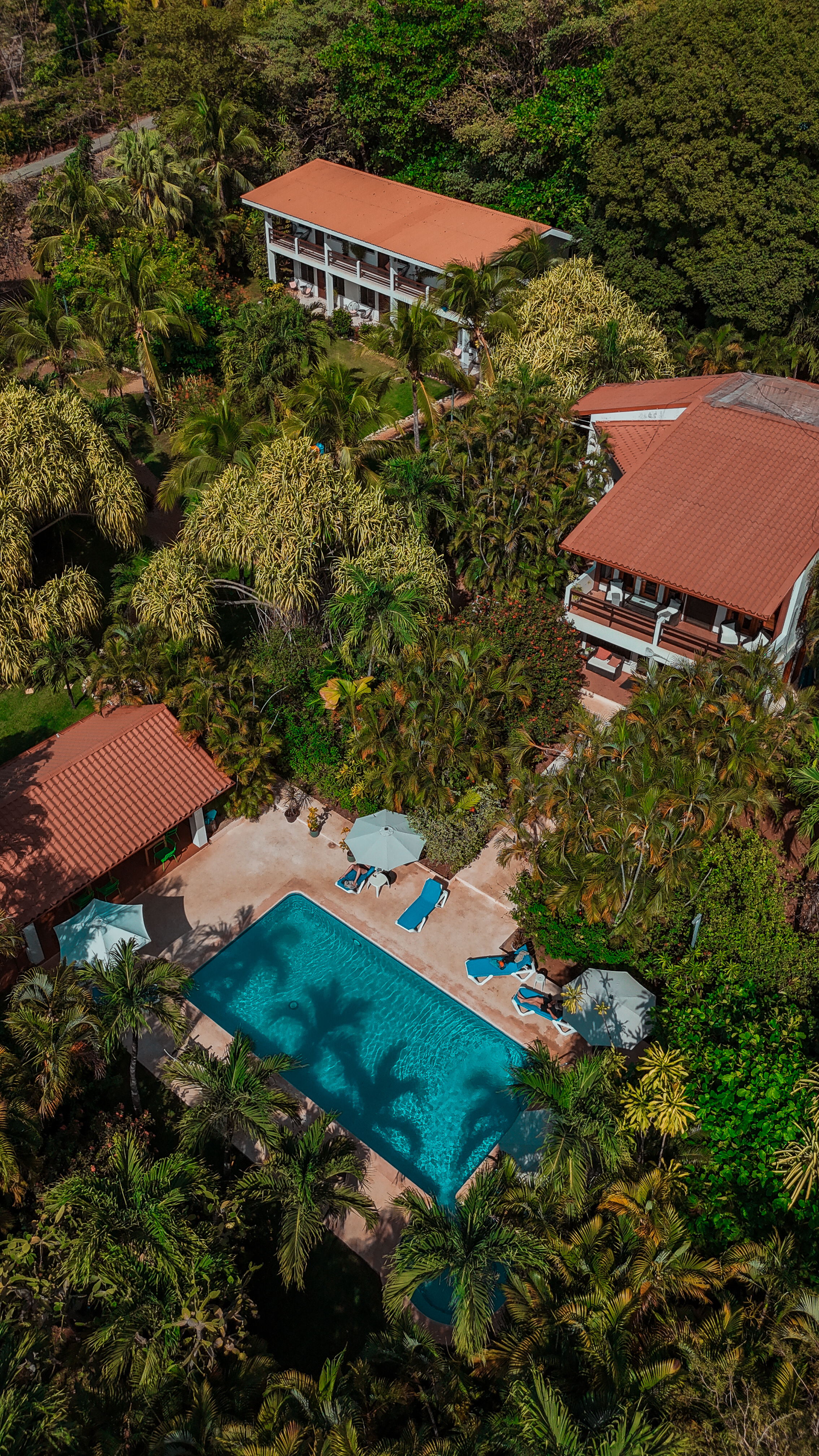
Welcome to Costa Rica and Villa Del Sol
Villa del
Sol is a great beach and diving resort on the Pacific coast: you will enjoy our excellent packages for diving, snorkeling, sailing
and
fishing trip, and adventure tours to the national parks and volcanoes.
People from all over the world come to scuba dive, sail, fish and snorkel.
You may also enjoy, golfing, horseback riding, hiking, cycling, tennis, and
kayaking. |
Menu |
||
Costa Rica's main attraction is the incredible
bio-diversity found within its' borders. The exceptional park system represents
13% of the national territory and reflects a strong commitment to
preservation. Costa Ricans consider environmentalism a national responsibility.
Everyone visiting Costa Rica will help shape the future of conservation.
GuanacasteThe Guanacaste region stretches from the western
edge of Lake Arenal out to the Pacific coast, encompassing the Nicoya Peninsula,
all the way up to the Nicaraguan border. This region tends to be a little
drier than other areas of Costa Rica, with a wide variety of flora and
fauna in its many National Parks. In the north, the mega-parks of Santa
Rosa and Guanacaste protect delicate forest systems and provide a migration
corridor for highland animals moving on to greener pastures in the wet
season. In the south, pre-historic limestone foundations make for an interesting
landscape, and at Barra Honda, some breathtaking cave formations sought
by spelunkers from around the globe. At the southern edge of the Nicoya
Peninsula, rocky beaches dotted with waterfalls and tide pools welcome
visitors who want more than just a hammock on the beach.
THE PARKS
Palo Verde National Park:
Rincon de la Vieja National Park
(summit elev. 1,916 m)
Close on Monday. The mystery of a volcano Impressive and imposing, the Rincon de la Vieja Volcano has been distinguished
as one of the most exuberant and unexplored areas of the Costa Rican territory. The difficult access makes it a challenge and helps retain its mystery for
visitors. Rincon’s beauty encompasses all kinds of contrasts: colors, textures
and scents in the vast array of flora and fauna of its geography. This uniqueness, seemingly magical and mysterious, leaves visitors with memories
deep-felt as the depth of the crater itself.
The Rincon de la Vieja Volcano is part of the areas protected by the
Costa Rican Government under the National Park regime. A regional administration
organization manages and protects the Rincon de la Vieja National Park, the Santa Rosa National Park, and the last area covered the Rincon Cacao Biological
Corridor. In 1999 UNESCO has recognized the Guanacaste Conservation Area (ACG)
a Natural World Heritage Site. It is located 264 km from San Jose and 27 Km northeast of Liberia.
The volcano is 1916 meter high. It is composed of two massifs, the Santa Maria and the one that provides the park’s name. Nine craters have been
identified, but only one of them is active. Never the less, around the volcanoes
you can observe fumaroles, vapor and volcanic mud spurts. Due to the different altitudes you can find habitats with different characteristics. On the lower
areas you will find trees such as Guanacaste (national tree of Costa Rica), Laurel and White Cedar, among others. As the altitude increases, vegetation
changes. The peak of the volcano is covered with ash and has very sparse
vegetation. Climbing to the top is difficult, even dangerous on a rainy day, or with the winds during the dry season. It takes about 4 to 5 hours to reach the
summit.
Other attractions are those known as Hornillas and Las Pailas, where
you will find hot water and mud springs that, depending on the time of the year will be bubbling because of the expulsion of volcanic gases. There are some lagoons in the area. One is located south of the
volcano. It contains clean water used by wild animals such as tapirs, peccaries and different species of monkeys.
Aside from its natural beauty, Rincon de la Vieja is of great importance to Costa Rican geography. Many of rivers and streams are born at its
skirt. This might be the reason why the park is one of the few areas where you can find large number of mammals. Groves of pure oak and others trees normally
difficult to find others places are found here.
Within the park, 257 species of birds have been sighted, including the
Three-wattled Bellbird, Great Curassow, Black-faced Solitaire, Montezuma
Oropendola, Bank Swallow, Emerald Toucanet, Elegant Trogon, Blue-throated
Goldentail, Spectaled Owl, White-fronted Amazon and Guaco.
Some other mammals found here include the Red Brocket Deer, Collared
Peccary, Agouti, Tayra, Northern Tamandua, Two-Toed Sloth, and Howler, White-faced and Spider monkeys. Insects are very numerous and include four
species of the abundant and beautiful morpho butterflies.
You will also be able to find through the foliage a large variety of
plant species such as the Guaria Morada Orchid (national flower) which can be easily recognized by its light purple color.
Meaning of the Volcano’s Name
There is a charming legend that explains the origin of the name Rincon de la Vieja. The native princess, Curabanda, fell in love with the chief
of a neighboring enemy tribe. When her father, Curabande, learned of the affair,
he captured him and threw him into the crater of the volcano. Curabanda went to
live on the side of the volcano and gave birth to a child. To allow the child to
be with his father, she threw him into the volcano, too. For the rest of her life, Curabanda lived near the crater and became a powerful healer. The people
referred to her home as “Rincon de le Vieja,” meaning “Old lady’s corner”.
Getting there:
Close on Monday. There are two routes into the parks: The southern route less
used, goes from the Barrio La Vistoria on theEstern side of Liberia and leads,
to the Sector “Santa Maria”. Distance: 25kms. The northern route turns right
from the Inter American Highway 5 kms north of Liberia, through the small
village of Curubande. This route brings you to the sector “Las pailas”. On this
road keep going straight up to a toll gate where you will have to pay $2 each to
pass through a private property. Keep going on the main road, pass the Hacienda
Guachipelin, the entrance of the Rincon de la Vieja Lodge, and there you are
just 2 kms from the park entrance. There is no public transportation up to the
park. Entrance fee: $10 per person. Distance from Villa del Sol: 1.6 hour drive to
the park entrance.
Go to the
top
Arenal Volcano (summit elevation 1,657 m)
In
July of 1968, the people of Arenal Hill were suddenly made to realize that
what they always thought was a harmless hill was actually a violent, resting
volcano. This volcano came to life, in a fury of rocks, lava, and ash.
It devastated the west flank and caused 78 deaths. Intermittent rumbling,
explosions, and nocturnal fire-spitting are the mesmerizing features that
draw visitors to its base by day and night. Cloud often obscures the summit,
but when lava flows cascade, incandescent rocks fly and Arenal roars few
forget it. Its flanks have been declare a national park but the nocturnal
light show can be witnesses equally well from outside the boundary.
Volcanic activity in 1998:
March 1998: Relatively quiet in December
but lava still venting in March
April 1998 Unusually energetic eruption
on 5 May sends pyroclastic flows 2 km downslide
June 1998 A mild eruptive phase following
the more energetic 5 May outburst
July 1998 Less vigorous eruptions but lava
still escaping
Go to the
top
Santa Rosa National Park
Area: 37,217 Terrestrial Ha, 78,000 Maritime HaDistance from Villa Del Sol: One hour drive to the park entrance.This park is located in the Guanacaste Province, 36 Km north of Liberia. This is the oldest and one of the best-developed national parks in Costa Rica. It covers most of the Peninsula Santa Elena, which juts out into the Pacific in the far northwestern corner of the country. It protects the largest remaining stand of tropical dry forest in Central America and important nesting sites for endangered species of sea turtle. The park also has historical connections, and includes the hacienda where an amateur Costa Rican army took on William Walker in 1856.In times past Indians have walked this land, and hunters, woodcutters, cowboys, and soldiers. Footprints today belong mainly researchers, park rangers, and a whole variety of nature lovers. What had been virgin tropical dry forest, cleared pastures, and a battlefield now is a Santa Rosa National Park, a piece of property where history is still written.The historical significance of Santa Rosa was primary reason it was protected by government, first as a national monument and then a national park. Soon, however, the ecological importance of its flora and fauna and the habitats that exist in this dry Pacific region was recognized. It is the ecological battle that is making history now, an effort not only to protect but also to restore some of these habitats. Research at Santa Rosa is shedding light on plant and animal relationships and how forests regenerate themselves, discoveries that make a difference here and around the world.This is one of the country's most important historic areas. The ranch house "La Casona" and the stone corrals witnessed the nation's greatest heroic deed: the Battle of Santa Rosa, which took place on March 20th, 1856. This old hacienda turned-museum alone is worth the visit. Santa Rosa has other treasures too.The park is a mosaic of 10 distinct habitats, including mangrove swamp, savanna and oak forest, Jaragua grassland and various trees such as the live Oak, shoemaker's tree and rough-leaf tree, among others. The deciduous forests contains some 240 species of trees and shrubs; among them Costa Rica's National Tree, the Guanacaste or Ear tree, Gumbo-limbo and Mayflower. In the evergreen forest the dominant species are Locust, Chicle, Oak, Tempisque and Bitter wood.It attracts a wide range of animals: more than 250 bird species and 115 mammal species (half of them bats, including two vampire species), among them relatively easily seen mammals such as white-tailed deer, coatimundis, howler, spider and white-face monkeys, and anteaters, jaguars still roam Santa Rosa, as do margays, ocelots, pumas, and jaguarondis; they’re all shy and seldom seen. Birds that you may see are, the magpie jay, orange-fronted parakeet, elegant trogan, rufous-naped wren, crested caracara, great curassow, common black hawk and long-tailed manakin. Finally, there are over ten thousand types of insects, including some 3,140 species of butterflies and moths.Santa Rosa is a vitally important nesting site for the ridleys and other turtle species. In the wet season the land is as green as emeralds, and wildlife disperses. In dry season however, when the parched scrubby landscaped give an impression of the East African plains, wildlife congregates at watering holes. You have to be patient and sit for long enough and you may see interesting creatures coming.The park is divided into two sections: The Santa Rosa sector to the south and the Murcielagos sector.A dirt road on the right leads to a memorial cross commemorating the battle of 1955, when Somoza, the Nicaraguan strong man made an ill-fated in Costa Rica. Six km farther on the paved road is La Casona, the museum and the park administration office.Trails are marked in detail on the map sold at the entrance of the park.Some of the trails:
Murcielagos: The entrance to Murcielago sector is 15 km west of the highway 1, 10 km north of the Santa Rosa sector park entrance. Better to bring your passport coming here. The road goes downhill to a coastal valley up to Cuajiniquil and then to the Bahia Junquillal. Drive carefully you will have to cross some rivers. On the way you will see the hacienda of the General Somoza that was used by the CIA as a training camp for the Nicaraguan Contras and is now a training camp for the Costa Rican Rural Guard. Close by is the secret airstrip built by Oliver North to supply the Contras.Direction: Santa Rosa sector is 37 km north of Liberia on the Pan-American hwy, and the Murcielagos sector is 10 km farther north via Cuajiniquil.Entrance fee: $6.00Camping facilities: In the Santa Rosa sector there are two campsites open to the public: One at La Casona and one at Playa Naranjo, both with facilities. In the Murcielagos sector there are a campground at the ranger station with facilities and one at Playa Blanca with no facilities.Park administration office in la Casona: Hours: 7:00 to 16:30Go to the top
Las Baulas National Marine Park
Las Baulas National Park (Parque Marino las Baulas) is located on the Pacific coast of Costa Rica in the Province of Guanacaste, near the village of Tamarindo. It supports the largest nesting colony of leatherback turtles in the Pacific Ocean with a population size of about 800 female turtles nesting per year in non-El Niño years. The Park was established by Presidential decree in 1990 and formalized in law in July, 1995. It is made up of three nesting beaches, Playa Grande, Playa Langosta and Playa Ventanas. It also protects two mangrove estuaries, Estero de Tamarindo and the Estero de San Francisco, as well as the ocean out to 12 miles offshore.Location:The park is located on the North Pacific coast of Costa Rica, 1.2 hour drive from Villa del Sol. It belongs to Tempisque Conservation Area. From the highway 21 (Liberia to Nicoya) turn right just after the village of Belen, follow the signs to Tamarindo, pass the village of Huacas continue on the road up to Matapalo, and after 9 kms you will reach Playa Grande.Conservation: A difficult task:Thanks to the protection effort of the EARTHWATCH GROUP through the Leatherback task force. Protection of turtles and their nests is the responsibility of National Park guards. Research and conservation efforts are spearheaded by Dr. Frank V. Paladino, Department of Biology,Indiana-Purdue University, Fort Wayne, IN 46805 and his colleagues through their EARTHWATCH Inc. project which runs from late September to March each year. Faculty, students, and volunteers conduct scientific investigations of the turtles and their eggs and help in local conservation efforts and protection. A museum at the main entrance of Playa Grande provides an excellent educational experience for anyone interested in learning about the turtles. An audio tour of the museum is available in several languages.Conservation faces many challenges at Las Baulas ranging from over development, through excessive tourism activities, to the stealing of eggs. The National Park has been chronically understaffed so that the beaches are often left unprotected. Despite an active education campaign, local residents still steal (poach) eggs from the beach. Tourists travel to the beaches expecting to see leatherbacks and often crowd around a nesting turtle, despite cautions from their local tour guides. Development continues behind the beach and increasing lights from new houses and the village of Tamarindo disorient hatchlings and adults.Although Las Baulas is remote from even the major population centers of Costa Rica, it suffers from the same pressures as found on sea turtle beaches in Florida, Greece, and elsewhere around the world. EARTHWATCH teams, concerned local residents, guides, local business leaders, scientists continue to work to improve the protection provided by the Park. The number of leatherbacks has been declining from the early 1980's when Peter Pritchard first "discovered" up to 200 leatherbacks a night nesting on Playa Grande to 1994-95 when 30 turtles a night was more typical to 1996-97 when as few as 10 turtles a night nested there. This decline appears to be related to many years of almost total poaching of eggs, to development behind the beaches, and to the incidental capture of leatherbacks in pelagic fisheries. The presence of an El Niño year in the Pacific is correlated with very low numbers of nesting leatherbacks at Las Baulas. In 1993-94 there were only 202 leatherbacks on Playa Grande and in 1996-97 only 128. In the season 2002-2003 between November 19th and January 12th, the best period, there were only about 30 turtles per week nesting at Playa Grande.
Did you know?
Tours: The best time to visit is from October to February. The turtles nest only at night, and particularly at high tide: www.tides.info Go to the top
Menu |
||